

Popular Products Overview
Popular Supplement Products and Formats for Men
An informational overview of natural supplement formats and categories that men commonly encounter in pharmacies and online stores across Indonesia. We explain what each format is, what it typically contains, and what to look for on a label — without ranking brands or declaring winners.
Orientation
If you have walked through a pharmacy in Palembang or browsed an online marketplace and felt overwhelmed by the range of options, this overview is designed to help you make sense of what you are seeing. We cover the most common categories of natural supplements for men — from single-ingredient herbal capsules to multivitamin complexes, mineral supplements, protein powders, and traditional Indonesian wellness products. For each category, we explain what it is, what it typically contains, and what practical considerations come with using it. We do not rank products, declare winners, or recommend specific brands.
Category 01
Single-Ingredient Herbal Capsules
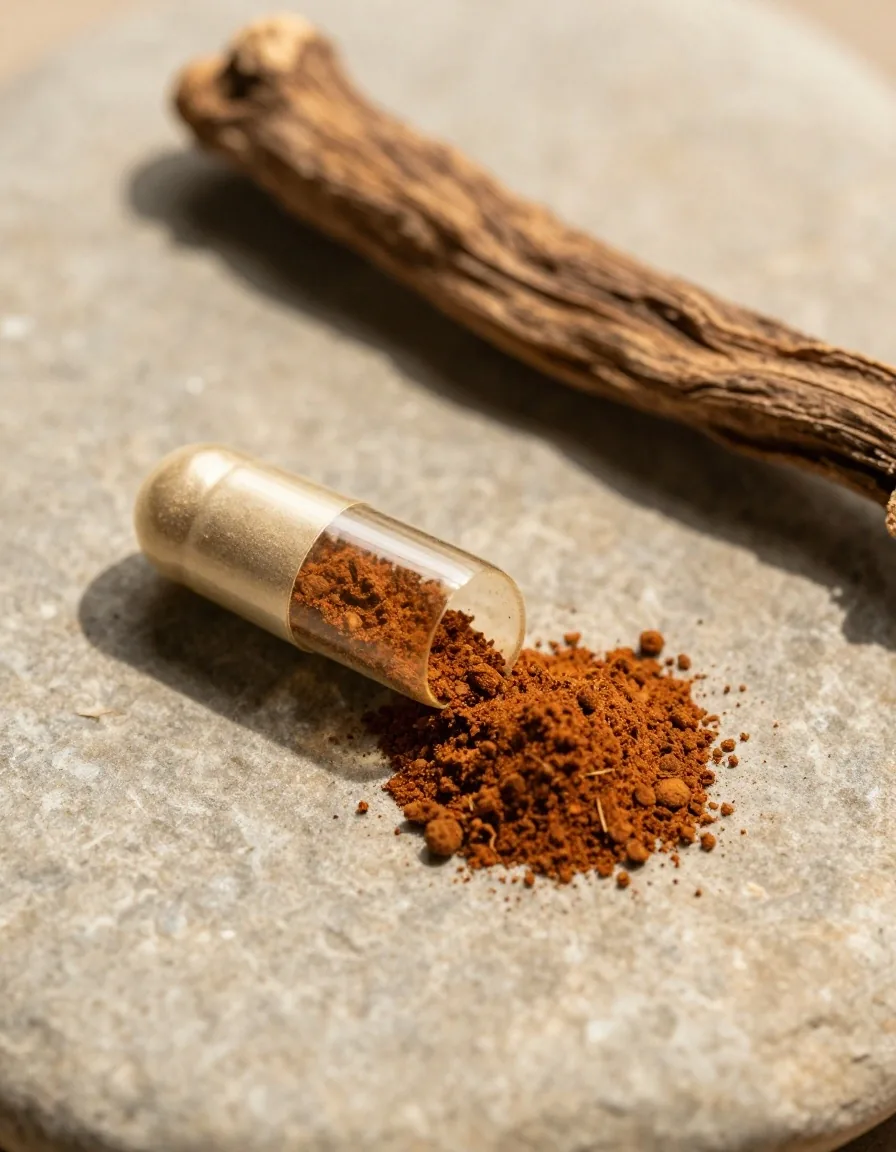
Single-ingredient capsules contain one plant-based extract in a defined dose per serving. Common examples include tongkat ali, maca root, ginseng, and ashwagandha, all of which are widely available in the Indonesian and international supplement markets. The appeal of a single-ingredient format is simplicity: you know exactly what you are taking and can compare products based on extract strength and dosage.
Labels often list an extract ratio, such as 100:1, which indicates how concentrated the plant material is relative to its raw form. A higher ratio does not always mean a stronger effect — it means more raw material was processed into each unit of extract. Understanding these terms is the difference between guessing and knowing what you are buying.
Common examples · Tongkat Ali · Maca Root · Ginseng · Ashwagandha
Category 02
Multivitamin Complexes
Multivitamin complexes combine multiple vitamins and sometimes minerals into a single product, usually a tablet or capsule. They are designed to provide a broad nutritional base in one daily serving. Men's multivitamins often exclude or reduce iron, since men generally need less iron than women, and excess iron can be harmful. Labels can list 20 or more nutrients, which makes comparison difficult without some knowledge of what each one does. A multivitamin is a convenience product, not a replacement for a varied diet.
Format
Tablets and capsules are the standard formats. Tablets are cost-effective for fitting 20-plus nutrients into one serving, but they can be large and hard to swallow.
Iron Content
Men's formulas often reduce or exclude iron. Check the label — if iron is listed, confirm the amount fits your needs before making it a daily habit.
Label Literacy
Our Vitamins and Minerals Guide covers individual nutrients in detail. Read it alongside any multivitamin label you are considering so you understand what each entry does.
Category 03
Mineral Supplements
Single-mineral supplements focus on one mineral, such as zinc, magnesium, or calcium. They are used by men who want to target a specific nutrient rather than take a broad multivitamin. Zinc supplements are popular in men's wellness contexts, often in the gluconate, citrate, or picolinate form. Magnesium supplements come in citrate, oxide, and glycinate forms, each with different absorption and digestive characteristics.
The form matters because it affects how well the mineral is absorbed and how it interacts with the digestive system. Knowing the difference helps you choose a product that fits your needs rather than picking based on price alone.
Zinc forms · Gluconate · Citrate · Picolinate — Magnesium forms · Citrate · Oxide · Glycinate


Category 04
Protein and Amino Acid Powders
Protein powders are among the most widely used supplements by men who train regularly. They typically come from whey, casein, soy, or pea protein, and are sold as flavored powders mixed with water or milk. Amino acid supplements, including branched-chain amino acids (BCAAs), provide specific protein building blocks in isolated form. In the Indonesian market, whey protein is the most common format, with plant-based options growing in availability.
Protein supplements are a dietary convenience, useful when whole-food protein intake is insufficient or impractical, not a requirement for physical progress. Understanding what they are and what they are not helps you decide whether they fit your routine.
Sources · Whey · Casein · Soy · Pea — Isolated · BCAAs
Category 05
Plant-Based and Traditional Wellness Products
Indonesia has a rich tradition of plant-based wellness, and many traditional ingredients now appear in modern supplement formats. Jamu — the Indonesian practice of using plant preparations for everyday health — includes ingredients like temulawak, kunyit, and jahe, which are available as capsules, powders, and liquid extracts in pharmacies and online stores.
These products sit at the intersection of traditional practice and modern commerce, which means labeling and quality standards can vary. Understanding the traditional context of an ingredient helps you evaluate commercial products more clearly. We cover both locally familiar ingredients and international products because men in Indonesia encounter both when shopping.
Temulawak
A rhizome from the ginger family, traditionally used in Indonesian wellness preparations. Available in capsule and powder form.
Kunyit
Turmeric root, widely used in cooking and traditional wellness. Modern supplements often list curcumin extract content on the label.
Jahe
Ginger root, familiar in daily Indonesian life. Found in supplement aisles as dried extract capsules and liquid tinctures.
Practical Guide
Format Comparison: Capsules, Tablets, Powders, Liquids
The format of a supplement affects convenience, portability, and sometimes absorption. We compare these formats because the choice affects how consistently you use a product, and consistency matters more than format when it comes to any supplement routine.
Capsules
Most common for herbsPortable, easy to swallow, and effective at masking strong-tasting ingredients. This is why capsules are the standard format for herbal extracts. The shell material — gelatin or a vegetarian alternative — is usually listed on the label.
Tablets
Cost-effectiveCost-effective for multivitamin complexes, allowing manufacturers to compress many nutrients into one unit. Tablets can be large and difficult to swallow, and some include binding agents that affect how quickly they dissolve.
Powders
Flexible dosingOffer flexible dosing and are standard for protein products. You can adjust the serving size to match your needs. The trade-off is that powders require mixing with water or milk, and they are less portable than capsules or tablets.
Liquids
Faster absorptionMarketed for faster absorption since the body does not need to break down a solid form first. They are less convenient for travel, often have shorter shelf lives after opening, and some carry strong flavors that require dilution.
Label Literacy
What to Look For on a Product Label
A supplement label should tell you what is in the product, how much per serving, and what form each ingredient is in. Label literacy is a practical skill, and we built this site to help you develop it. Here is what a clear, honest label includes.
-
Active ingredient names
Each active ingredient should be listed by its recognized name, not a marketing label. This lets you research the compound independently.
-
Amount per serving
The quantity of each ingredient in a single serving, usually in milligrams or micrograms. Without this, you cannot compare two products meaningfully.
-
Extract ratios on herbal products
A ratio like 100:1 tells you how concentrated the extract is relative to raw plant material. Higher ratios mean more raw material was used per unit of finished extract.
-
Fillers and capsule materials
A clear listing of any fillers, binders, or capsule shell materials. These are not harmful in themselves, but you should know what they are.
-
BPOM registration number
If a product is sold in Indonesia, check for a BPOM registration number on the packaging. This indicates the product has been registered with the National Agency of Drug and Food Control.
Critical Thinking
Avoiding Marketing Red Flags
Certain marketing patterns should prompt caution. We do not name specific brands to avoid, but we do encourage readers to apply critical thinking when evaluating any product. If a claim sounds too good to be true, it probably is — and the right response is to look for clear ingredient information rather than persuasive marketing.
Phrases like "miracle," "breakthrough," or "scientifically proven formula" are not supported by the kind of language legitimate supplement regulation permits.
Before-and-after photos and celebrity endorsements without disclosure are signs of aggressive marketing rather than honest product information.
Any claim that a product cures or treats a condition is a red flag. Supplements are not a substitute for professional health guidance.
Products using proprietary blends without disclosing individual ingredient amounts should be avoided — you cannot evaluate what you cannot see.
Continue Reading
Vitamins and Minerals Guide
Detailed breakdowns of individual vitamins and minerals, including what each one does and how to read it on a supplement label.
Read the guide →Related Topic
Energy and Endurance Resources
How energy and endurance supplements fit into a daily routine, and what to consider when evaluating products in this category.
Explore resources →About This Site
Our Editorial Standards
How we choose topics, what we will and will not say about supplements, and the principles behind every page on this site.
Learn about standards →Questions about a product you saw?
We do not sell supplements, but we can help you understand a label or category.