

A Reader's Guide
Vitamins and Minerals Guide for Men
An educational breakdown of the essential vitamins and minerals that men encounter in supplements — what each nutrient does, where it comes from naturally, and what format you see on the shelf. Plain terms, no dosing advice.
Why this guide exists
If you have ever stood in a supplement aisle wondering what vitamin D actually does or why magnesium appears in so many products, this page is for you. We break down each nutrient in plain terms so you can read labels and make informed choices about vitamins and minerals for men.
This guide covers the essential vitamins and minerals that men commonly encounter in supplements, explaining what each nutrient does, where it comes from naturally, and what format it is sold in. We focus on descriptive, educational content — not dosing advice or personal recommendations.
Think of this as label literacy for men's vitamin supplements: a way to understand what is inside the bottle before you compare products or talk to a health professional about what suits your routine.

Typical format: softgel capsule with carrier oil. Labels list IU or micrograms.
Nutrient One
Vitamin D
Vitamin D is a fat-soluble nutrient that supports normal bone health and immune function. The body produces it when skin is exposed to sunlight, which is why people who spend most of their time indoors — like office workers in Palembang — may have lower natural production despite living in a sunny climate.
Dietary sources include fatty fish, egg yolks, and fortified foods. In supplement form, vitamin D is typically sold as D3 (cholecalciferol) in softgel capsules, often combined with a carrier oil since it is fat-soluble. Labels usually list dosage in IU (international units) or micrograms.
We describe what vitamin D does in general terms, but we do not tell you what dose to take, because that depends on factors only a health professional can assess.
Nutrient Two
B Vitamins
The B-complex includes eight vitamins that contribute to normal energy metabolism and nervous system function. These include B1 (thiamine), B2 (riboflavin), B3 (niacin), B6, B12, folate, biotin, and pantothenic acid. B vitamins are found in animal products like meat, eggs, and dairy, as well as in legumes and whole grains, which is why strict vegetarians may pay attention to B12 in particular.
Energy drink marketing leans heavily on B vitamins, but the reality is that they support metabolism, not stimulate it the way caffeine does. If your diet is varied, B vitamin intake from food is often adequate, and supplementation is most relevant when dietary sources are limited.
Common forms
B-complex tablets or individual B12 capsules, often in the cyanocobalamin or methylcobalamin form.
Natural sources
Meat, eggs, dairy, legumes, whole grains. B12 is primarily from animal products.
What it supports
Normal energy metabolism and nervous system function — not stimulation, despite marketing claims.

Nutrient Three
Vitamin C
Vitamin C is a water-soluble antioxidant that supports normal immune function and collagen synthesis. It is found in citrus fruits, guava, papaya, and leafy vegetables, all of which are readily available in Indonesian markets.
Because it is water-soluble, the body does not store it in significant amounts, which is why daily intake through food or supplements is common. Supplement formats include tablets, effervescent powders, and capsules, often at doses ranging from 100 mg to 1000 mg.
Vitamin C is one of the most commonly supplemented nutrients globally, partly because it is inexpensive and well-tolerated by most people. We explain what it does and where to find it naturally, not whether you need to supplement it.
Nutrient Four
Vitamin E
Vitamin E is a fat-soluble antioxidant that helps protect cells from oxidative stress. Natural sources include nuts, seeds, vegetable oils, and green leafy vegetables. In supplements, it appears as tocopherol or tocotrienol forms, often in softgel capsules.
Vitamin E is less commonly discussed in men's supplement marketing than vitamins D or B, but it appears in many multivitamin complexes and antioxidant blends. Dietary intake from nuts and seeds is usually sufficient for most people.
High-dose supplementation is something to discuss with a health professional rather than self-prescribe. We include it here because it shows up on multivitamin labels and readers deserve to know what it is.
Nutrient Five
Zinc
Zinc is a trace mineral involved in immune function, protein synthesis, and normal cellular repair. Dietary sources include beef, pumpkin seeds, cashews, and legumes. In men's supplements, zinc is one of the most commonly featured minerals, often appearing in multivitamin complexes and single-ingredient capsules.
Supplement forms include zinc gluconate, zinc citrate, and zinc picolinate, which differ in how the mineral is bound and how well it is absorbed. Indonesian food culture includes zinc-rich foods like beef rendang and legume-based dishes, which means dietary intake varies depending on eating habits.
As with all minerals, more is not better, and excessive zinc intake can interfere with copper absorption, so we describe the nutrient without recommending doses.
Nutrient Six
Magnesium
Magnesium supports normal muscle function, energy metabolism, and nervous system activity. It is found in leafy greens, nuts, seeds, whole grains, and dark chocolate. Despite being widely available in food, low intake is common because many people do not eat enough of these sources regularly.
Supplement forms include magnesium citrate, magnesium oxide, and magnesium glycinate, each with different absorption characteristics. Magnesium appears frequently in supplements marketed toward active men because of its role in muscle function.
We explain what it does and what formats exist, and we note that dietary improvements should come before supplementation for most people. A handful of pumpkin seeds or a bowl of cooked spinach delivers meaningful magnesium, and food sources also bring fiber and other nutrients a capsule cannot replicate.
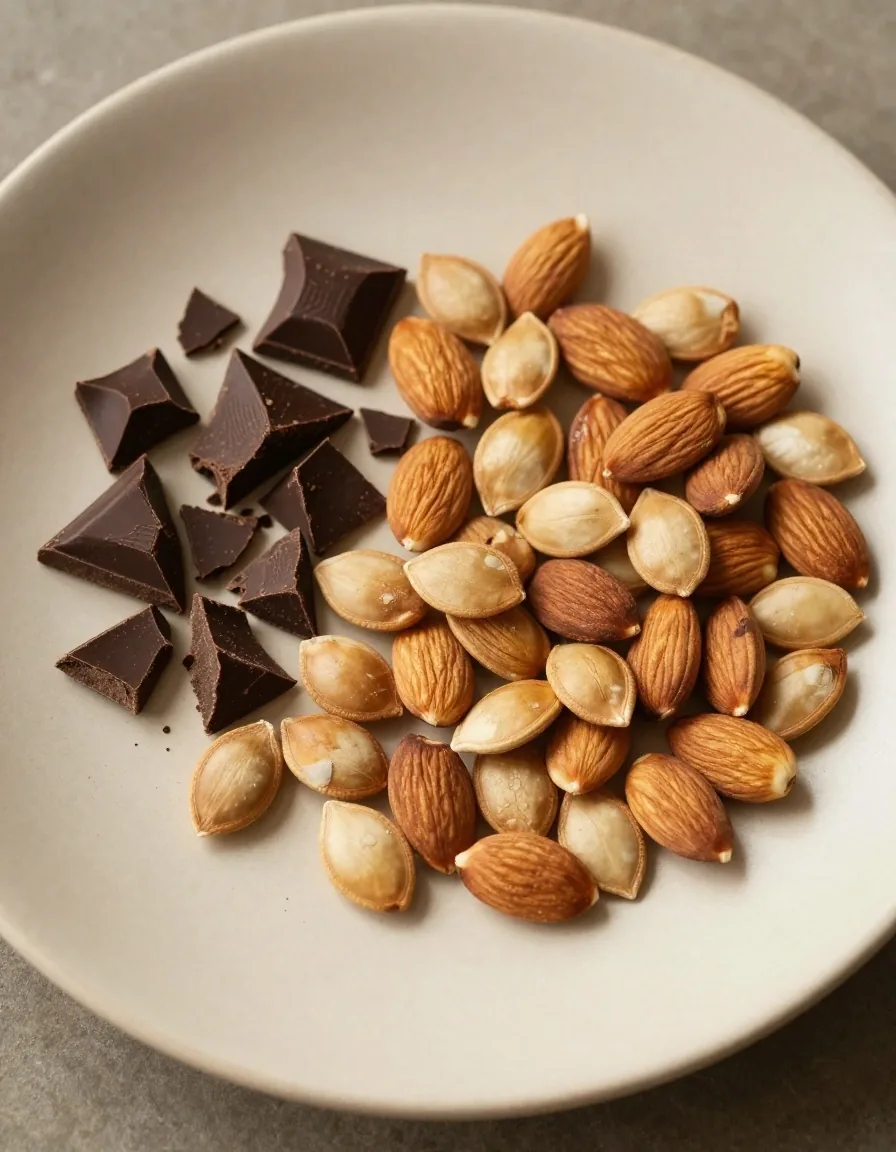
Natural sources: leafy greens, nuts, seeds, whole grains, dark chocolate.
Nutrients Seven and Eight
Iron and Calcium
Iron and calcium are essential minerals that men need in different amounts than women. Iron supports oxygen transport in the blood, and dietary sources include red meat, liver, and leafy greens. Men generally need less iron than women, and excess iron intake can be harmful, which is why men's multivitamins often contain little or no iron.
Calcium supports bone health and is found in dairy, tofu, and leafy vegetables. Supplement formats range from tablets to chewable wafers. We mention these minerals because they appear on labels and because men sometimes assume more is better, which is not the case with iron.
Understanding why men's formulas often exclude iron is a practical piece of label literacy. If a multivitamin lists iron, ask why — and compare it against what your diet already provides before assuming the inclusion is a benefit.
Practical Skill
Reading Multivitamin Labels
A multivitamin label can list 20 or more nutrients, which makes it hard to know what matters. We suggest looking at which vitamins and minerals are included, what form each one is in, and what dose is provided per serving.
Some labels list "100% of daily value" for many nutrients, which sounds reassuring but tells you nothing about absorption or quality. Others use proprietary blends that list ingredients without disclosing individual amounts, which makes comparison difficult.
Our guidance is to read labels slowly, look up any ingredient you do not recognize, and compare products on form and transparency rather than on marketing claims. This is a skill that improves with practice, and our content is designed to help you build it.
Check which vitamins and minerals are included and in what form — the form tells you about absorption characteristics.
Look at the dose per serving, not just the percentage of daily value — percentages do not reflect absorption or quality.
Watch for proprietary blends that group ingredients without disclosing individual amounts — this makes comparison across products difficult.
Look up any ingredient name you do not recognize before assuming it is essential or beneficial for your routine.
Compare products on form and transparency rather than on marketing language — healthy lifestyle products earn trust through clear labeling.
Where to go next
Now that you can read a label, the next step is understanding how these nutrients fit into energy and endurance supplements or browsing the popular products overview to see how natural capsules for strength and vitality are typically formulated.
Energy and Endurance Resources
How B vitamins, magnesium, and other nutrients in this guide connect to everyday energy and endurance products for men.
Explore resourcesPopular Products Overview
See how the vitamins and minerals in this guide appear on actual product labels across popular products for men.
Browse overviewEditorial Standards
How we choose what to cover, what we leave out, and why this guide describes nutrients instead of recommending doses.
Read standardsQuestions about a label?
If you have a question about a specific supplement label, a nutrient we covered here, or men's health support topics you would like us to write about next, reach out. We respond to reader questions during our working hours and use them to shape future guide content.
Contact Suplemen Pria- Address
- Jl. Jenderal Sudirman No. 45, Ilir Barat I, Palembang, Sumatera Selatan 30129
- Phone
- +62 711 344 725
- [email protected]
- Working hours
- Monday to Friday, 09:00 – 18:00
A note on this guide
This page is educational and informational. Suplemen Pria describes what vitamins and minerals do and where they appear naturally — we do not provide dosing advice, personal recommendations, or medical guidance. Supplements are not a substitute for a varied diet. If you are considering adding a supplement to your routine, talk to a qualified health professional about what fits your individual needs.